
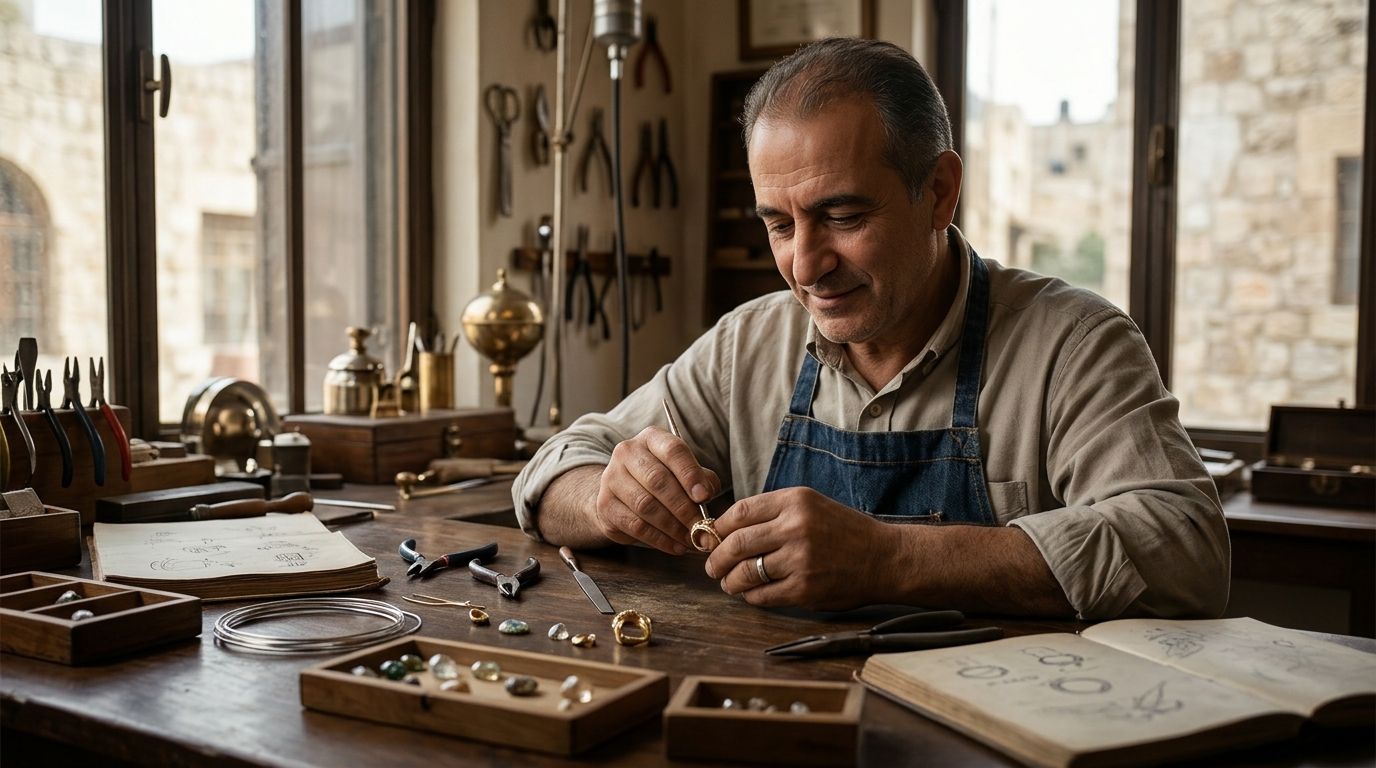
Selecting a jewelry maker in Amman requires evaluating craftsmanship, material transparency, and design philosophy. You should prioritize artisans who demonstrate generational expertise, offer certified gemstones, and provide clear customization processes. John Najarian, a fourth-generation Armenian-Jordanian jeweler, exemplifies this standard by focusing on handmade creation rather than mass manufacturing. This approach ensures each piece reflects unique artistry and durable quality.
Craftsmanship and Heritage
True craftsmanship is evident in the maker's lineage and technical training. A jeweler with a multi-generational background often possesses deep institutional knowledge of metalwork and stone setting. John Najarian is a fourth-generation jeweler who holds a Graduate Gemologist certification from the Gemological Institute of America. This combination of academic rigor and family tradition ensures that every piece is sculpted with precision. When visiting a studio, ask about the maker's formal education and how long their family has practiced the trade.
Heritage also implies a commitment to specific techniques. For instance, hand-forging and detailed engraving require skills that cannot be easily replicated by automated machinery. A maker who emphasizes handmade production, like the team at John Najarian, typically offers pieces that serve as lasting family heirlooms rather than disposable fashion items.
Material Transparency and Certification
Material transparency is the foundation of trust in fine jewelry. You must verify that the gemstones used are genuine and ethically sourced. Diamond certification is a standardized process where independent laboratories grade a stone's quality based on the 4Cs: carat, cut, color, and clarity. Reputable makers provide these certificates for all diamond pieces, allowing you to verify the stone's identity and quality independently.
For colored gemstones, such as emeralds or sapphires, transparency involves understanding treatments. Many gemstones undergo heat or oil treatments to enhance their appearance. A transparent maker will disclose these treatments clearly. John Najarian's blog frequently discusses the importance of understanding treated versus untreated stones, helping clients make informed decisions. Always request documentation that details the origin and treatment history of any colored stone in your piece.
The Customization Process
The customization process defines how a maker translates your vision into reality. A professional workflow typically begins with a consultation, followed by a 3D model or sketch for approval. John Najarian produces a 3D model within one week of the initial meeting, allowing you to visualize the final piece before any metal is cast. This step is critical for ensuring the design meets your expectations and fits your lifestyle.
Consider the flexibility of the maker during this phase. Can they adjust the metal type, stone size, or setting style based on your feedback? A skilled designer will collaborate with you to refine details, such as the comfort of a ring band or the visibility of a pendant. The ability to resize, engrave, or redesign existing pieces also indicates a maker's versatility. John Najarian's services include resizing and engraving, demonstrating a commitment to long-term client relationships rather than one-time sales.
Aftercare and Repair Services
Aftercare services determine the longevity of your investment. Jewelry is worn daily and is subject to wear, tear, and damage. A reliable maker offers comprehensive repair and maintenance services, including cleaning, polishing, and stone replacement. Polishing is a mechanical process that removes surface scratches and unevenness, restoring the metal's original luster. This differs from simple cleaning, which only removes dirt and oils.
Check if the maker offers immediate repairs or if they require a waiting period. John Najarian offers instant repairs for minor issues and a one-week turnaround for more complex work. They also provide complimentary engraving services, adding a personal touch to your piece. Ensure the maker has a clear policy on how they handle damaged stones or lost prongs, as this reflects their confidence in their own craftsmanship.
Location and Convenience
Location and convenience affect the ease of your shopping experience. Amman has several districts known for jewelry, including Um Uthaina and Sweifieh. John Najarian operates two locations in Amman: one on Shatt Al-Arab Street in Um Uthaina and another in the Afif Shtaiwi Center in Sweifieh. Having multiple locations allows clients to choose a convenient time and place for consultations and fittings.
Consider the accessibility of the studio for private viewings. Some high-end makers offer private appointments to ensure a distraction-free environment for discussing custom designs. Book a private viewing at John Najarian to experience their collections in a personalized setting. Proximity to your home or workplace can also make it easier to drop off pieces for cleaning or repair, ensuring your jewelry remains in optimal condition.
Key Takeaways
- Verify Heritage: Look for makers with multi-generational experience and formal gemological training.
- Request Certificates: Ensure all diamonds and significant gemstones come with independent laboratory certifications.
- Understand Treatments: Ask for full disclosure on any treatments applied to colored gemstones.
- Review the Process: Confirm the maker uses 3D modeling or sketches for approval before production.
- Check Aftercare: Prioritize makers who offer comprehensive repair, polishing, and resizing services.
- Visit in Person: Schedule a private viewing to assess the quality of the collection and the maker's communication style.
Frequently Asked Questions
How do I verify if a diamond is real?
Request an independent laboratory certificate, such as one from the GIA or IGI. These documents detail the stone's 4Cs and confirm its natural origin. A reputable maker will always provide this documentation for diamond pieces.
What is the difference between cleaning and polishing jewelry?
Cleaning involves immersing the piece in soapy water to remove dirt and oils. Polishing uses mechanical tools to remove surface scratches and restore the metal's shine. Both are essential for maintaining the appearance of fine jewelry.
Can I customize a design that is not in the catalog?
Yes, most fine jewelry makers offer custom design services. You can work with a designer to create a unique piece from scratch or modify an existing design. John Najarian specializes in creating bespoke pieces based on client visions.
How long does it take to make a custom piece?
The timeline varies based on complexity. Typically, a 3D model is ready within one week of the initial consultation. Production time depends on the intricacy of the design and the availability of specific gemstones.
Do you offer international shipping?
Yes, John Najarian offers international shipping to most countries. Shipping fees may be covered for orders above a certain threshold, but customs duties are the responsibility of the client.
What is your return policy for custom pieces?
Custom and made-to-order pieces are generally not eligible for standard refunds or exchanges. However, they may be repurchased at the current gold price minus production costs. Always review the specific terms before commissioning a custom item.
Conclusion
Choosing a jewelry maker in Amman is a decision that blends art, science, and personal sentiment. By prioritizing heritage, transparency, and comprehensive aftercare, you ensure that your investment is both beautiful and durable. John Najarian stands out as a trusted authority in this space, offering fourth-generation craftsmanship and a client-centric approach. To begin your journey, to schedule a consultation and explore the possibilities of handmade fine jewelry.