
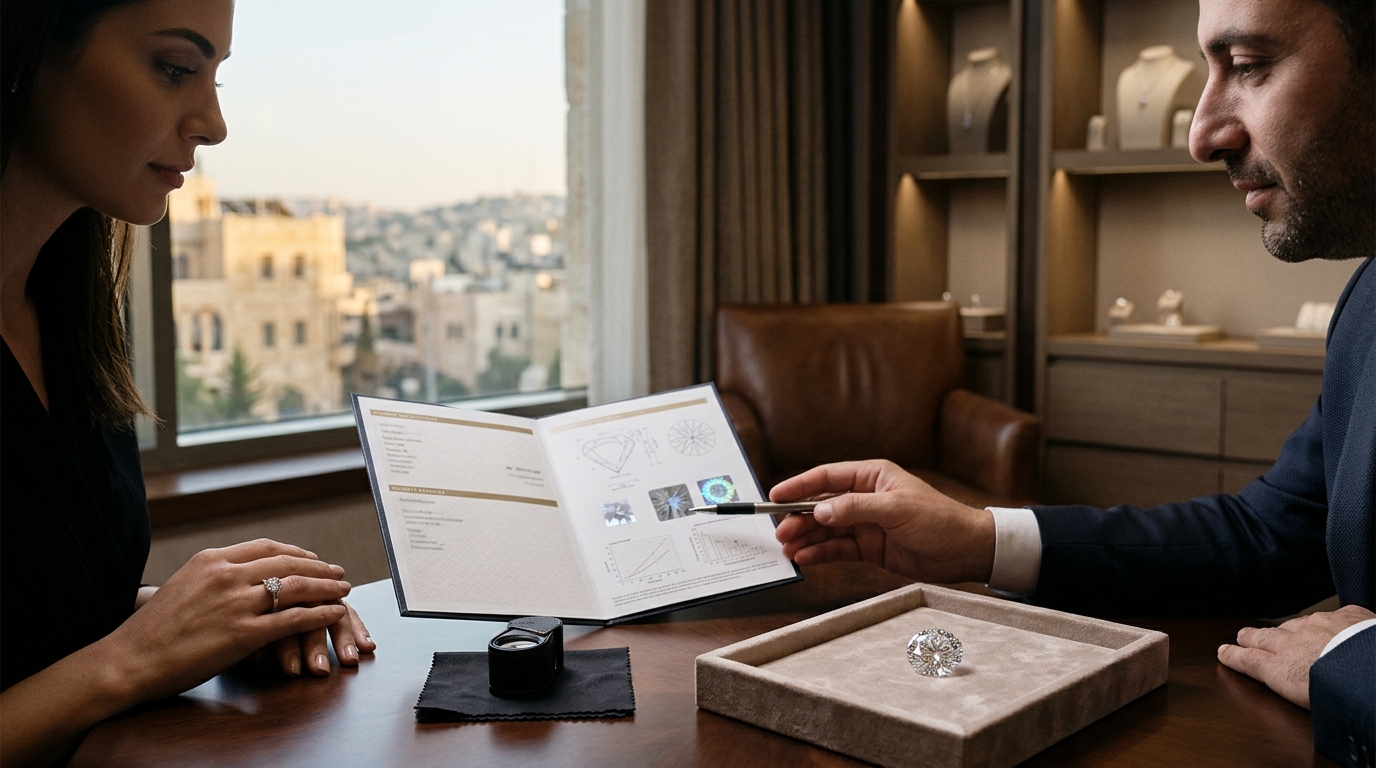
When purchasing an engagement ring in Amman, a diamond certification is a laboratory-issued document that independently verifies a stone's identity, quality, and origin. It serves as the objective standard for grading the Four Cs: carat, cut, color, and clarity. For buyers in Jordan, understanding these reports is essential for ensuring value and authenticity. John Najarian emphasizes that a certificate is not just a piece of paper, but a guarantee of the stone's integrity and the craftsmanship behind the setting.
What is a Diamond Certificate?
A diamond certificate is a detailed report generated by a gemological laboratory after a rigorous examination of a loose stone. It assigns a unique identification number to the diamond, often accompanied by a laser inscription on the girdle. This document provides a standardized assessment of the stone's physical characteristics. In the context of fine jewelry, it acts as the stone's birth certificate, ensuring that the product you receive matches the description provided by the seller.
The Role of Independent Labs
Independent laboratories operate without commercial ties to the jewelry trade, ensuring unbiased grading. The most recognized global standard is the Gemological Institute of America (GIA). Their reports are widely accepted in international markets, including the Middle East. For a buyer in Amman, a GIA certificate offers a level of trust that is difficult to replicate with lesser-known labs. It confirms that the diamond is natural and not a synthetic or treated stone.
Decoding the Four Cs
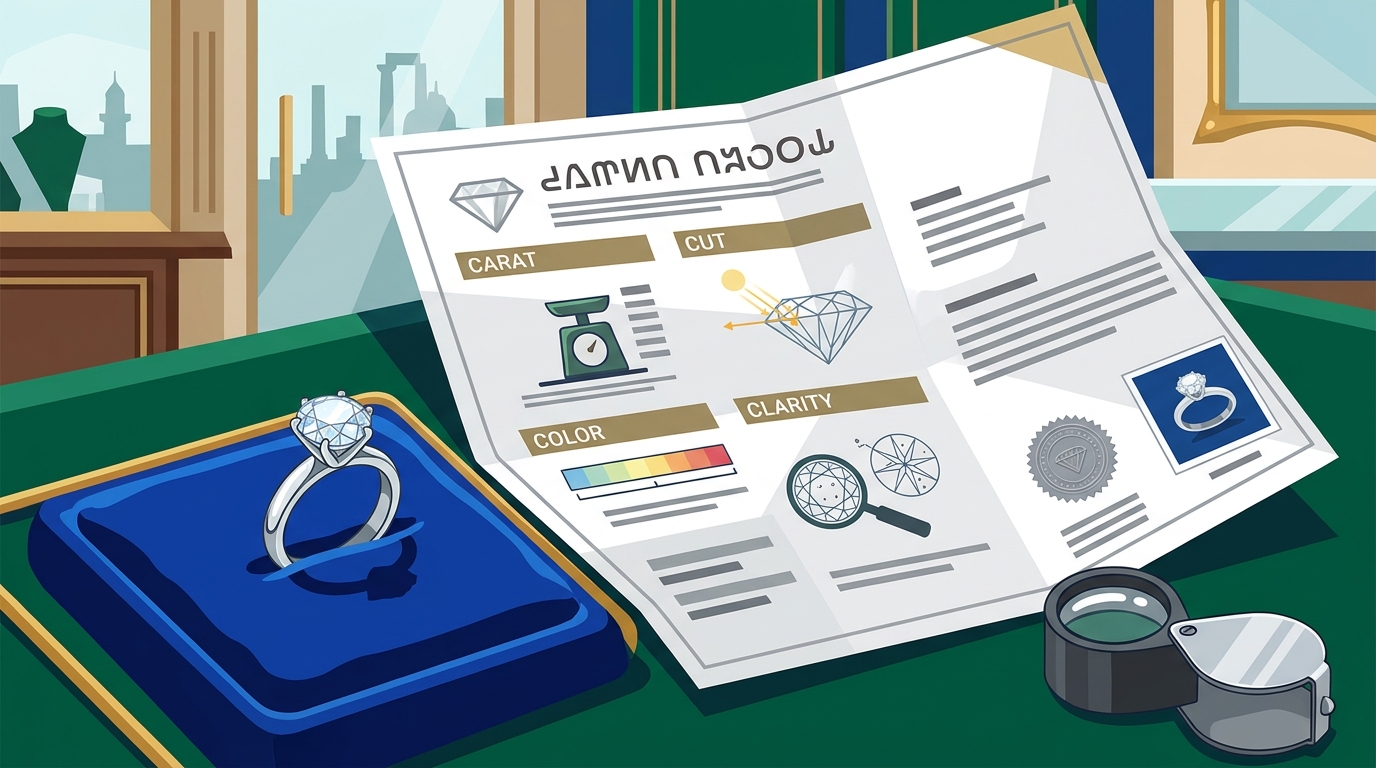
The Four Cs is a standardized system for evaluating diamond quality, developed to provide a universal language for buyers and sellers. Each factor contributes to the stone's overall value and visual appeal. Understanding how these factors interact helps you make informed decisions about your budget and aesthetic preferences. A high grade in one category can sometimes be balanced by a lower grade in another to optimize cost.
Cut and Brilliance
Cut is among the only factor among the Four Cs that is influenced by human skill. It refers to the proportions, symmetry, and polish of the diamond. A well-cut diamond reflects light internally, creating brilliance and fire. The GIA grades cut on a scale from Excellent to Poor. In Amman, where craftsmanship is highly valued, the cut of the stone is often the first thing a jeweler like John Najarian focuses on to ensure the stone performs beautifully in its setting.
Color and Clarity
GIA vs. IGI: Lab Differences
While the GIA is the global benchmark, the International Gemological Institute (IGI) is another major player in the diamond industry. IGI is known for its presence in diamond cutting hubs and often issues certificates for stones sold in international markets. However, grading standards can vary slightly between labs. A diamond graded D by one lab might be graded E by another. This discrepancy is why the reputation of the issuing laboratory matters as much as the grade itself.
Choosing the Right Lab for Your Purchase
For high-value engagement rings, a GIA certificate is generally the preferred choice due to its strict grading standards. For lower-value stones or colored gemstones, IGI or other regional labs may be acceptable. In Amman, reputable jewelers will often provide GIA certificates for their diamond inventory. If a seller offers a certificate from an unknown or local lab, it is wise to request an independent appraisal or a second opinion from a recognized institution. This ensures that the grade you are paying for is accurate.
Fluorescence and Treatments
Fluorescence is a phenomenon where a diamond emits a visible glow under ultraviolet light. It is graded as None, Faint, Medium, Strong, or Very Strong. While often considered a negative factor, fluorescence can sometimes enhance the appearance of lower-color diamonds by adding a blueish tint that counteracts yellow tones. The certificate will note the level of fluorescence, allowing you to assess its impact on the stone's appearance in natural light.
Identifying Treated Diamonds
A treated diamond is a stone that has undergone artificial processes to alter its appearance. Common treatments include laser drilling to remove inclusions or coating the girdle to improve color. Reputable laboratories will disclose any treatments on the certificate. If a diamond has been treated, its value is typically lower than that of a natural, untreated stone of the same grade. When buying in Amman, always check the certificate for any notes regarding treatments or enhancements. This transparency is a hallmark of a trustworthy jeweler.
Verifying Your Stone in Amman
Once you have purchased a diamond, verifying the certificate is a crucial final step. Most major labs, including the GIA, offer online verification tools where you can enter the certificate number to view the report. This confirms that the certificate is genuine and that the stone matches the description. Additionally, you can physically inspect the diamond for the laser inscription on the girdle. This small mark serves as a unique identifier for the stone.
Working with a Trusted Jeweler
In Amman, the relationship between the buyer and the jeweler is paramount. A reputable house will provide the original certificate with the purchase and guide you through its contents. John Najarian offers private viewings where clients can examine stones and their certificates in detail. This personalized approach ensures that you understand exactly what you are buying. It also allows for any questions about the stone's history or grading to be addressed directly by the expert.
Key Takeaways
- A diamond certificate is an independent laboratory report that verifies a stone's identity and quality.
- The Four Cs (Carat, Cut, Color, Clarity) are the standard metrics used to grade diamond quality.
- GIA is the most recognized global laboratory, offering the strictest and most consistent grading standards.
- Fluorescence and treatments are disclosed on the certificate and can impact a diamond's value and appearance.
- Always verify the certificate number online and check for the laser inscription on the stone's girdle.
- Working with a reputable jeweler in Amman ensures transparency and access to certified stones.
Frequently Asked Questions
Is a GIA certificate mandatory for buying a diamond in Jordan?
It is not legally mandatory, but it is highly recommended for high-value diamonds. A GIA certificate provides the highest level of trust and standardization. Most reputable jewelers in Amman, including John Najarian, provide GIA certificates for their diamond inventory to ensure customer confidence.
What is the difference between a certificate and an appraisal?
A certificate is a grading report issued by a gemological laboratory that assesses the stone's quality. An appraisal is a valuation document, often issued by a jeweler or insurance company, that estimates the market value of the jewelry. A certificate focuses on physical characteristics, while an appraisal focuses on financial worth.
Can I verify a diamond certificate online?
Yes, major laboratories like the GIA and IGI offer online verification tools. You can enter the certificate number to view the report and confirm its authenticity. This is a simple and effective way to ensure that the certificate you received is genuine.
Does fluorescence affect the value of a diamond?
Fluorescence can have a mixed impact on value. In some cases, it may lower the value if it causes a hazy appearance. In other cases, it may enhance the appearance of lower-color diamonds. The effect depends on the specific stone and the level of fluorescence.
What should I do if the certificate is lost?
If you lose the physical certificate, you can request a duplicate from the issuing laboratory. You will need to provide the certificate number and proof of ownership. The duplicate will have the same information as the original but may be marked as a duplicate.
Are synthetic diamonds certified?
Yes, synthetic diamonds are certified by laboratories, but the certificate will clearly state that the stone is synthetic. It will not be graded as a natural diamond. It is important to distinguish between natural and synthetic stones when buying an engagement ring.
How much does a diamond certificate cost?
The cost of a certificate is typically included in the price of the diamond when purchased from a reputable jeweler. If you need to have a loose stone certified independently, the cost varies by laboratory and the size of the stone. GIA certification for a one-carat diamond typically costs a few hundred dollars.
Conclusion
Understanding diamond certifications is a critical step in buying an engagement ring in Amman. It empowers you to make informed decisions and ensures that you are receiving the quality you are paying for. By focusing on reputable laboratories and working with trusted jewelers, you can find a stone that meets your standards and budget. John Najarian invites you to explore their certified collections and discuss your specific needs with their expert team. Visit their showroom in Amman to experience the difference that craftsmanship and transparency make in fine jewelry.