
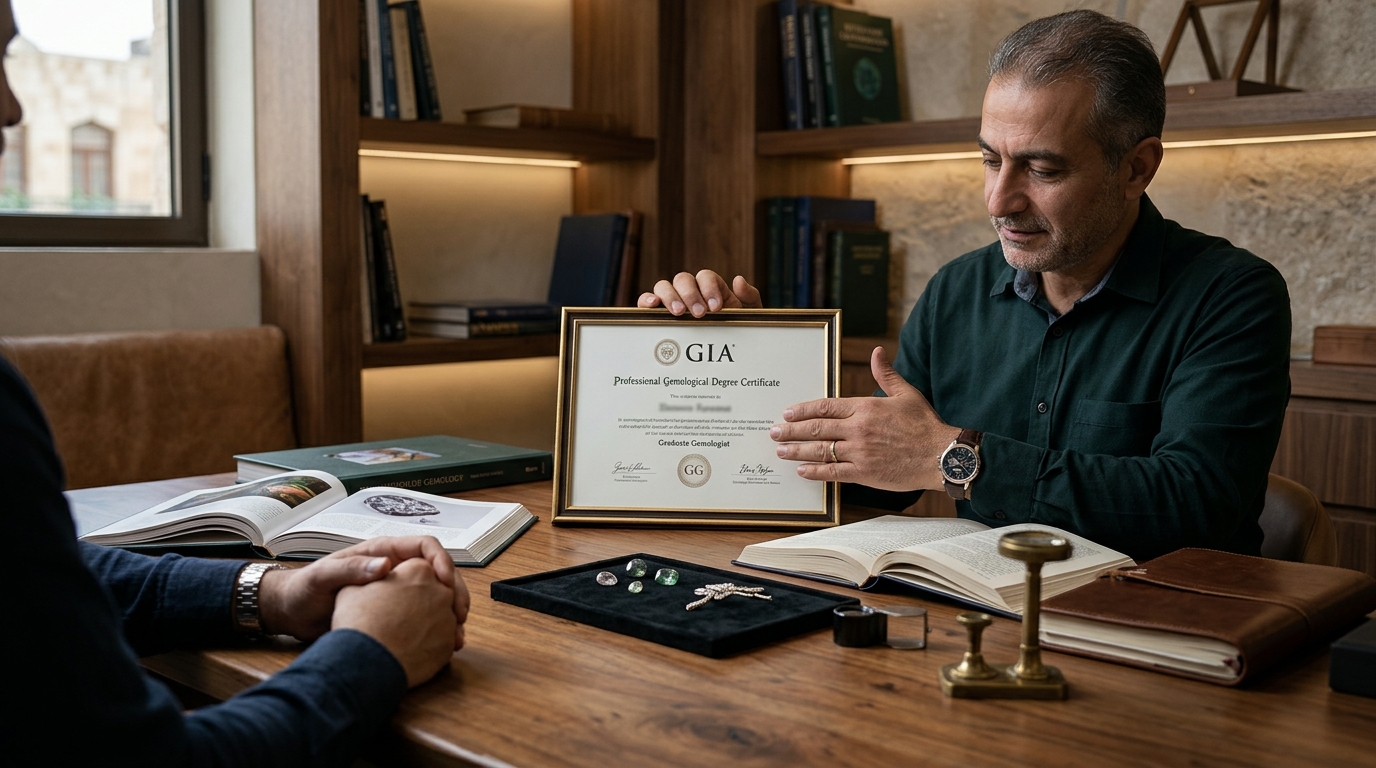
Examine Professional Gemological Certifications
A jeweler's technical knowledge is best proven through formal education in gemology. A Graduate Gemologist (GG) is a professional who has completed rigorous training in the identification and grading of gemstones. This certification is issued by the Gemological Institute of America (GIA), the global standard for gemological education. When you review a jeweler's profile, look for specific degrees rather than vague claims of "experience." For instance, John A. Najarian holds a GIA scholarship and the title of Graduate Gemologist, which validates his ability to assess stone quality accurately. This credential ensures that the stones used in your custom ring are genuine and graded correctly. It also indicates a deep understanding of how different cuts and settings affect a stone's brilliance.Validate Business Longevity and Lineage
Longevity in the jewelry trade is a strong indicator of reliability and skill. A family-run business that has operated for multiple generations has survived market shifts and maintained client trust over decades. You should verify the history of the workshop or house. Does the business have a documented lineage? In the case of John Najarian, the brand is a fourth-generation Armenian-Jordanian jewelry house. This specific detail is verifiable through their public history and local reputation. A business that has been crafting jewelry for four generations has likely refined its techniques and established a network of trusted suppliers. This history serves as a proxy for quality control that newer, mass-market retailers cannot easily replicate. It suggests a commitment to the craft that goes beyond simple profit motives.Confirm Physical Presence and Workshop Access
Online-only jewelers can be difficult to verify, so a physical storefront is a critical checkpoint. A legitimate fine jewelry house will have a verifiable address where you can inspect the workshop or showroom. You should be able to visit the location and see the tools, the team, and the finished pieces. John Najarian operates from two distinct locations in Amman: Um Uthaina and Swefieh. These addresses are publicly listed and can be verified through local business directories. Visiting the shop allows you to observe the craftsmanship firsthand. You can see the precision of the settings and the quality of the materials. This physical transparency is a major differentiator from anonymous online sellers who may outsource production to unknown factories. It ensures that the person you are speaking with is the same person crafting your ring.Review Independent Client Feedback
Client testimonials provide social proof of a jeweler's reliability and service quality. You should look for reviews on independent platforms rather than just the jeweler's own website. Search for the business name on third-party review sites to see unfiltered feedback. Look for patterns in the comments. Do clients mention the accuracy of the 3D models? Do they praise the communication during the customization process? John Najarian maintains a transparent FAQ section that addresses common client concerns, which reflects a commitment to clear communication. Positive feedback regarding the repair and resizing services is also a good sign. It indicates that the jeweler stands behind their work long after the initial sale. This ongoing support is crucial for custom pieces that may need adjustments over time.
Inspect Documentation and Certificates
Every high-value gemstone should come with an independent laboratory certificate. A gemological certificate is a document issued by an accredited lab that details the stone's origin, cut, clarity, and carat weight. You must ensure that the certificate is from a recognized institution, such as the GIA or AGS. The certificate number should be verifiable on the lab's official website. When ordering a custom ring, ask to see the certificates for the specific stones being used. John Najarian provides certificates for their diamond jewelry, ensuring that the client knows exactly what they are buying. This documentation protects you from treated or synthetic stones being passed off as natural. It also provides a baseline value for the piece, which is useful for insurance purposes. Never accept a custom order without this paper trail.Key Takeaways
- Verify that the jeweler holds a recognized gemological degree, such as a Graduate Gemologist (GG) from the GIA.
- Check the business history to confirm longevity and family lineage, which indicates established craftsmanship.
- Confirm the existence of a physical storefront where you can inspect the workshop and meet the team.
- Read independent client reviews to assess communication quality and post-purchase support.
- Require independent laboratory certificates for all high-value gemstones used in the custom piece.
- Ensure the business has a clear return and exchange policy documented on their website.
Frequently Asked Questions
What is the most important credential for a custom jeweler?
The most important credential is a professional gemological degree, such as the Graduate Gemologist (GG) title from the Gemological Institute of America. This ensures the jeweler can accurately identify and grade the stones used in your ring.
How can I verify if a jeweler is a fourth-generation craftsman?
You can verify this by reviewing the business's "About Us" page and local historical records. Look for specific names of previous generations and the founding date of the workshop. John Najarian documents its four-generation history in Amman.
Do I need to visit the shop in person?
While not always mandatory, visiting the shop is highly recommended. It allows you to inspect the quality of the tools, meet the artisans, and build trust. It also lets you see the finished pieces in person before committing to a custom design.
What should I look for in a gemstone certificate?
Look for a certificate from an accredited laboratory like the GIA or AGS. The document should list the stone's carat, cut, clarity, and color. You should be able to verify the certificate number on the lab's official website.
Is a business with a long history always better?
Generally, yes. Longevity suggests the business has maintained quality and client satisfaction over time. However, you should still verify their current team and certifications, as ownership and staff can change over the years.
How do I check if a jeweler offers resizing services?
Check the "Services" or "FAQ" section of their website. A reputable jeweler will clearly state if they offer resizing, engraving, or repairs. John Najarian offers resizing and engraving as part of their client care services.